
VLF Testing
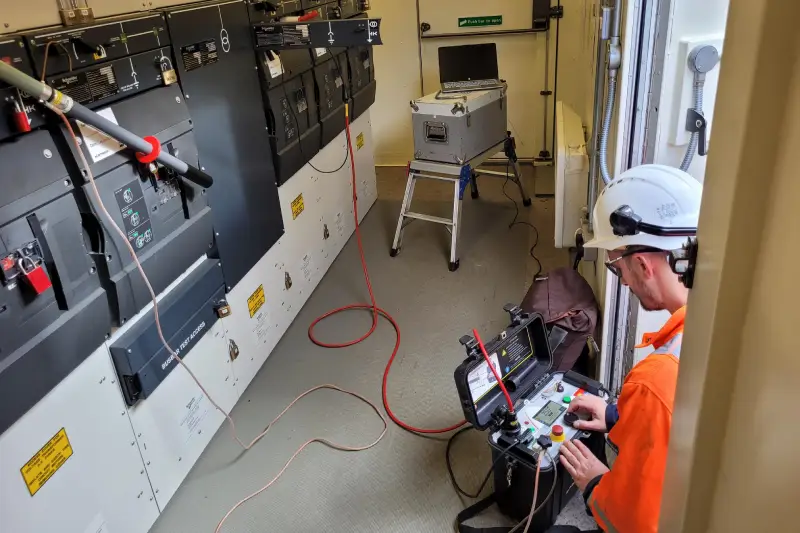
Very Low Frequency Cable Testing for HV and MV Systems
We provide VLF testing for high voltage and medium voltage cables across the UK. VLF (Very Low Frequency) testing is a proven method to assess cable insulation and confirm readiness for service after installation or repair.
Why Choose VLF Testing?
VLF testing applies a low-frequency AC voltage to the cable, reducing stress while still revealing insulation faults. It is safer and more practical than traditional DC testing for modern polymer-insulated cables.
VLF testing helps:
- Detect insulation defects and water treeing
- Confirm safe installation before energisation
- Identify aged or degraded cable insulation
- Support commissioning and maintenance
All tests are carried out using calibrated VLF test sets in line with UK and international standards.
What We Test
We perform VLF testing on a wide range of cables used in private networks, substations, and infrastructure projects.
Typical applications:
- XLPE and EPR insulated HV and MV cables
- New cable installations
- Post-jointing or post-repair testing
- Scheduled condition assessments
- Renewable and industrial sites
We provide full documentation with every test including test voltage, duration, and insulation performance results.
Our fault response capabilities include:
- Emergency call-outs for HV and LV faults
- Cable fault location and isolation
- Switchgear inspections and temporary restoration
- Coordination with DNOs and site teams
- Fault reports and follow-up recommendations
We support both private networks and utility-connected systems, providing a fast and efficient service when reliability matters most.
Frequently Asked Questions
What is VLF testing?
VLF testing applies a low-frequency AC voltage to assess the insulation condition of high and medium voltage cables without causing damage.
When is VLF testing used?
It is used after cable installation, jointing or repair, and during routine maintenance to confirm insulation strength and fault-free condition.
Is VLF better than DC testing?
For modern polymer cables, yes. VLF is safer and more reliable for detecting defects without damaging the insulation.
Do I receive a report?
Yes. Each test includes a report with voltage levels, duration, insulation performance and pass/fail results.